

Eric Musgrove
Contributor
Suwannee County has been blessed with a number of citizens whose impact has reached far beyond the confines of the county. The man under discussion today was one such citizen. Thurber Talmadge (“T. T.”) Scott was born in Sumter County, Ga., on May 27, 1887. He lived most of his early years in Cordele, where his father was a tax collector, farmer and storekeeper. Scott began working outside the home at age 14 and, by 15, was working in the timber industry. At the age of 17, he had established his own business and was a sawmill operator.
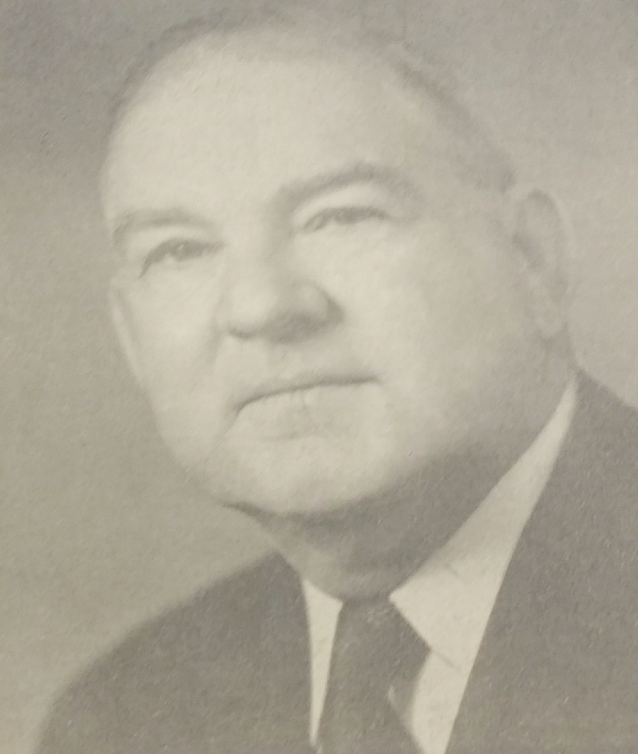
In May of 1916, Scott moved to Madison County, Fla., to run a sawmill there. He cut timber in Madison and nearby Taylor Counties and, in 1920, moved to Live Oak. Scott’s first sawmill in Live Oak was located where the tobacco warehouses would stand for decades off Houston Street. Within a few short years, Scott had cut much of the surrounding timber in Suwannee County and moved to South Florida, where he purchased tens of thousands of acres. After four years in Polk County and four years in Osceola County, Scott had established himself as a leading timber expert in Florida. Several South Florida communities, including Sumica and Kenansville, were established around Scott’s sawmills and related businesses, becoming self-sufficient for the hundreds of workers. These communities revolved around Scott’s businesses and used their own currency bearing T. T. Scott’s name. The workers built everything in the communities, including rail lines, but there was no plumbing or electricity. Scott himself was the de facto sheriff, keeping law and order. One of his sons noted 70 years later that his father would collect his workers’ guns every weekend to reduce violence. However, once the timber was gone, these communities dried up and disappeared.
In 1933, Scott returned to Live Oak, where he passed operations of his local sawmill to one of his sons. Scott did not stay idle, however, participating in more timber operations in Florida and Georgia. Much of the year was spent in Miami, where he had major timber and banking operations, but he considered Live Oak his home and maintained his residence there for many years.
Scott’s interests expanded far beyond timber. In 1921, he purchased his first stock in the First National Bank of Live Oak. In 1931, with local millionaire W. J. Hillman in declining health, Scott purchased the remainder of Hillman’s sizeable stock and took over as vice president of the bank, soon holding a majority of its stock. In 1951, he sold the bulk of his First National Bank stock to P. C. Crapps, Jr., but remained as director. Scott also had an active interest in the Hamilton County Bank in Jasper. Scott helped save the tobacco market in Suwannee County in 1933 by financing local growers. As a result of Scott’s financial assistance, sales went from 240,000 pounds in 1932 to over 3 million pounds in 1933. He also loaned money to erect additional tobacco warehouses in Live Oak, and the local crop continued to thrive for decades until the dangers of tobacco were well-documented.
In 1940, Scott purchased two skyscrapers in Miami, the Security Building and the Congress Building (both still standing), for $480,150 (nearly $5 million in 2018 dollars) at an auction after the previous owner went bankrupt. In 1948, Scott purchased a large hotel in Lakeland and a smaller one in Miami. A large citrus grove near Fort Pierce was added to his possessions soon thereafter.
Scott operated all of these companies until selling his business interests in 1951. Scott was named chairman of the Board of Trustees for the Suwannee County Hospital Board when it was established and was the driving force to establish the Suwannee County Hospital, which was completed in 1948. Scott remained on the Board of Trustees until 1951.
More on Mr. Scott next week!
Eric Musgrove can be reached at ericm@suwgov.org or 386-362-0564.