
Eric Musgrove
Contributor
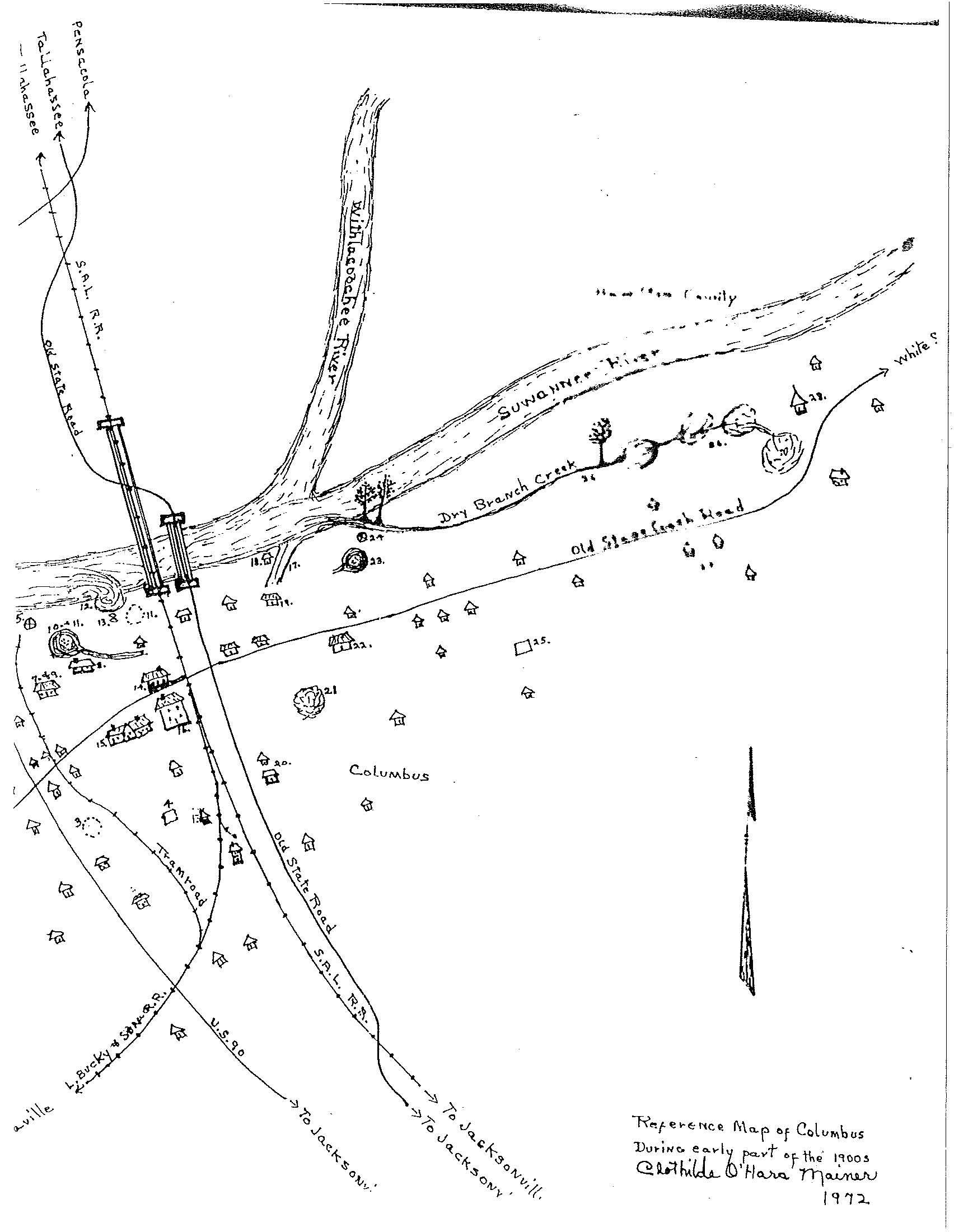
In January 1855, the charter of the Columbus Bridge Company was renewed for another 10 years; it was probably the name of the company created by legislative action in 1844 and originally composed of Joseph B. Watts, Francis Jones, David Platt, Enoch Hall, A. and Vann, Loud and Sadler. By the following year, indications were that the Columbus Bridge Company had apparently gone out of business because William H. Watson had been authorized to operate ferries at Columbus to both Hamilton and Madison Counties for a period of 10 years.
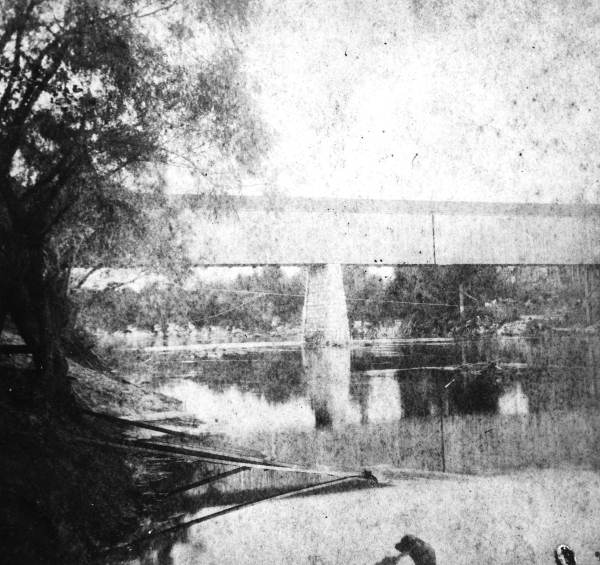
Despite the apparently unsuccessful attempts to totally clear the Suwannee River of obstructions, Columbus was still important enough during the Civil War to have the only completed railroad bridge across the Suwannee River (until the last month of the war, anyway). The Pensacola & Georgia Railroad had completed this bridge in early 1861, just before the beginning of the war. An interesting fact about the bridge was that it was a wooden-covered bridge. After each train went through it, workers had to rush onto the bridge to put out any embers from the engine’s smokestack so that the entire bridge did not catch fire and burn down. This bridge served as the primary supply line for Confederate forces outside of Florida. It became even more important after 1863, when the fall of Vicksburg cut off Confederate supplies from Arkansas and Texas.
After the end of the Civil War in 1865, George Franklin Drew moved to the Columbus area and built a sawmill near his home across the Suwannee River in Madison County; this had the effect of drawing people and businesses to the Madison County side of the River. In 1868, the Suwannee Steamboat Company was chartered with the goal of transferring freight and produce between Clay’s Landing and the town of Columbus, in Suwannee County. The charter gave the Suwannee Steamboat Company sole navigation rights between those two points. Any person or persons navigating or transporting freight or produce without permission of the Suwannee Steamboat Company would be guilty of a misdemeanor and fined between $200 and $500. The charter was approved on Aug. 3, 1868, and was good for 20 years unless the Steamboat Company failed to perform its duties within five years.
Columbus was still a large enough community in 1869 that it was one of Suwannee County’s six polling places to determine the county seat. During this time, Charles Dean ran the ferry crossing between Suwannee, Hamilton and Madison Counties; his home overlooked the ferry and Suwannee River on the Suwannee County side.
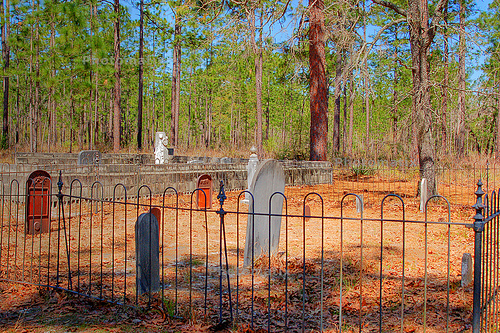
By 1873, Columbus had dried up as markets shifted and financial depression hit the United States. The post office had been renamed Ellaville in 1872 and moved to the Madison County side of the river, but eventually returned to the Suwannee County side before shutting for good in 1943. All that remains of Columbus today are a cemetery, Confederate earthworks from the Civil War, the remains of the original ferry landing and a few ghostly ruins. These are all found within the Suwannee River State Park, one of Florida’s first state parks.
Eric Musgrove can be reached at ericm@suwgov.org or (386) 362-0564.